Golf Blitz
- 4.3
- Rating
- 1.00M
- Installs
- Free
- Price

 Analysis by App-foxy
I went into Golf Blitz expecting a quick mobile sports game, and that is exactly where it works best: short bursts of competitive golf built around reaching the hole before the other players. It is free to play, made by Noodlecake, and available to a broad audience with an Everyone age rating. After spending time with it, my main impression is that it understands the difference between a golf game for careful simulation and a golf game designed to keep your hands moving.
The appeal is immediate. You are not settling in for a quiet eighteen-hole round with realistic club selection, wind calculations, and long pauses between shots. Instead, every hole becomes a compact race. I found myself watching the course, choosing a shot, reacting to the changing situation, and trying to recover quickly when another player gained an advantage. That pace gives the game a lively personality, but it also means that people looking for traditional golf may find it too hectic.
On the store, the game carries an average rating of 4.3 from around 55 thousand ratings, with more than 1 million installs. Those numbers fit my experience: this is an easy game to understand in a few minutes, yet it has enough pressure and timing to keep a familiar player interested. The important question is not whether it looks like golf in the strictest sense. It is whether its fast competitive format makes each hole enjoyable. For me, the answer is usually yes, especially when I have only a few minutes to play.
You May Also Like

 Google Keep - Notes and lists
Google Keep’s Quiet Growth Shows the Appeal of Simpler Notes
As mobile work gets busier, Google Keep keeps winning a simple contest: capture a thought quickly, find it later, and get on with the day.

 Blood Strike: 2.5 Anniversary
Blood Strike’s Loadouts Turn Every Drop Into a Tactical Gamble
A close look at Blood Strike’s custom loadouts: how fast access to signature weapons reshapes its battle royale rhythm, rewards preparation, and narrows the gap between fights.

 Pandora - Music & Podcasts
Pandora’s Music Is Easy to Start, but Harder to Recover
Pandora’s strength is its low-effort path from a seed to a station. Its weak spot is how much confidence it asks you to place in connection, setup, and quiet recovery.

 8 Ball Pool
 Is Built on Rivalries, Rematches, and Routine
A close look at the rivalries, rematches, shared routines, and unanswered safety questions that turn a quick pool match into a persistent mobile community.

 Samsung Music
’s Quiet Strength Is Playing What You Already Own
Its reach comes less from spectacle than from dependable access to a personal library. That simplicity is both the app’s strongest retention engine and its ceiling.

 AccuWeather: Weather Radar
AccuWeather Review: A Quick, Clear Forecast for Everyday Decisions
For everyday plans, the best forecast is the one you can understand quickly. AccuWeather makes rain timing, radar, and local conditions easy to act on, with a few trade-offs.
More From Our News Desk



How the first few matches establish the mood
The first thing I noticed was how little time the game needs to explain itself. The central goal is clear from the beginning: race to the hole, make useful shots, and avoid wasting opportunities. That directness is valuable on a phone because I do not need to study a long ruleset before understanding what I am doing. The game presents golf as an active contest rather than a patient exercise in precision.
That choice shapes the entire first impression. A normal golf title often asks me to appreciate the shot before I see its result. Here, the result matters because it changes the race immediately. A successful shot is not just a good number on a scorecard; it can create a lead, open a route, or force another player to respond. A poor shot feels costly because the other competitors continue moving while I recover.
I particularly like this design for small gaps in the day. If I am waiting for an appointment or taking a short break, the game gives me something more involving than a passive time-killer without demanding the commitment of a full sports simulation. The quick structure also makes it easy to stop after a match, although the competitive loop can encourage me to play one more round when I intended to put the phone down.
The presentation helps that first impression feel friendly rather than severe. Golf Blitz does not approach its subject with the formal tone of a televised tournament. Its visual language is more playful, and that makes mistakes easier to accept. I can miss a shot, lose ground, and still feel invited to try again instead of punished by a stern simulation. That lightness is important because the game is built around repeated attempts.
At the same time, the cheerful tone should not be mistaken for a lack of pressure. Races can become tense very quickly. When another player is close to the hole, I have to balance speed against control. Taking an extra moment may improve the shot, but hesitation can also surrender the advantage. The game’s first impression therefore has two layers: it looks approachable, while its competitive rhythm asks for concentration.
A golf setting translated into a playful visual language
The art direction is strongest when it turns the course into a readable playground. A good mobile sports game needs to communicate the important information at a glance, and the simplified presentation supports that goal. I can focus on the shape of the route and the immediate shot rather than getting distracted by a heavy simulation interface.
That visual clarity also contributes to the mood. The courses feel like stages in a race, not just empty patches of grass. The setting keeps the recognizable identity of golf while allowing the game to exaggerate movement and competition. This is a useful compromise: players who enjoy the basic idea of golf can recognize the activity, while players who prefer arcade action are not buried under realism.
One subtle strength is that the bright, compact presentation makes failure feel informative. When a shot goes wrong, I can usually understand the mistake in the context of the course. I was too ambitious, reacted too slowly, or chose a line that did not suit the moment. The game does not need to explain every error with a detailed replay for the lesson to be clear. That keeps the action moving and makes improvement feel practical.
The trade-off is that anyone searching for a calm, scenic golf experience may not find enough quiet here. The setting is designed to support competition, not to provide a relaxing landscape tour. If your ideal golf game is about walking between holes, admiring realistic environments, or carefully managing a full round, a conventional golf simulation would be a better fit.
Why the sound and pacing matter more than they first appear
The sound design works as part of the game’s rhythm rather than trying to dominate it. In a fast match, audio cues help reinforce the sense that something has just happened: a shot connected, a player advanced, or the race changed. I do not need to stare at every part of the screen to feel the momentum. That is especially useful when several actions are happening close together.
The pacing is the real star. Each decision has a short life span. I cannot spend too long admiring a promising position because the other players are not waiting for me to finish thinking. This creates a pleasant tension between planning and instinct. I still want to choose a sensible shot, but I also need to trust my first read of the course.
That rhythm makes the game feel closer to an arcade race than to turn-based golf. The distinction matters when deciding whether to install it. I would recommend it to someone who enjoys quick reactions, friendly competition, and the satisfaction of shaving time from a route. I would point a patient simulator fan elsewhere, particularly if they dislike being rushed or prefer to make every shot in isolation.
There is also a useful everyday scenario here. I played it during a short commute break, expecting to complete one match and stop. Because the action begins quickly and the objective remains visible, I did not need to reconstruct a complicated strategy after putting the phone down. That makes it more convenient than a deeper sports game when my attention is divided. On the other hand, if I am already tired or distracted, the same speed can make mistakes pile up faster than I would like.
The mechanics reward decisions, not just fast fingers
The most important mechanical lesson is that speed alone is not enough. Rushing every shot may feel aggressive, but a bad position can cost more time than a brief pause would have. I learned to treat each shot as a small trade-off: how much risk can I accept, and what happens if the attempt fails? That question gives the simple race format more depth than the store summary suggests.
A practical habit is to look at the next part of the route before committing. The best immediate landing spot is not always the one that travels the farthest. Sometimes a controlled position keeps the next shot straightforward, while an ambitious attempt creates a recovery problem. This is one of the game’s less obvious strengths: it encourages route awareness without turning the experience into a spreadsheet.
Another useful approach is to separate mistakes caused by timing from mistakes caused by judgment. If I lose because I acted too slowly, I can work on rhythm. If I lose because I chose an awkward line, I need to read the course differently. Treating every defeat as “I was not fast enough” is misleading. The game rewards players who can combine quick execution with a basic sense of space and consequence.
That balance is also why the game can remain interesting after the novelty fades. The controls and objective are easy to grasp, but the pressure of a live race changes how I use them. A familiar shot can feel completely different when I am behind, when another player is close, or when I need to recover from an earlier error. The mechanics are simple enough for casual play but not so empty that every match feels identical.
Progression and optional spending are part of the practical decision. The game is free to download, with in-app purchases ranging from $0.99 to $99.99 per item. I would approach those purchases carefully. The free entry is a genuine advantage for trying the format, but competitive mobile games can make it easy to spend in small steps when I am chasing improvement or trying to keep pace. I would recommend deciding on a personal spending limit before playing regularly, rather than making that decision in the middle of a frustrating losing streak.
The current version is 3.13.5, and the game supports devices running Android 7.0 or later. That makes it accessible to people who are not using the newest phone, although the actual feel of any fast game still depends on the device’s responsiveness and connection conditions. For this kind of title, smooth input matters more than visual ambition. If your phone struggles with touch response or the connection is unreliable, the competitive pacing may feel less fair than it should.
Where it fits among other mobile sports games
Compared with traditional golf games, Golf Blitz is less interested in authenticity and more interested in confrontation. A simulation may be better if you want club selection, realistic course management, and the satisfaction of completing a measured round. This game is better when you want the hole itself to become a contest of timing, route choice, and recovery.
Compared with endless runners or other quick competitive games, it has a more deliberate core. I am not simply reacting to obstacles that arrive in a fixed stream. I still need to decide how to approach a shot and understand why one route may be safer than another. That gives the action a distinctly golfing flavor, even though the pace is much faster than real golf.
It also occupies a useful middle ground for friends with different gaming habits. Someone who rarely plays sports games can understand the goal quickly, while a more experienced player can focus on cleaner decisions and better timing. The limitation is that the same accessibility may not satisfy players who want a large career mode, detailed customization, or a realistic long-term sporting simulation. Its strength is concentration, not breadth.
For new players, I would avoid measuring success only by wins during the first sessions. Pay attention to which choices repeatedly create trouble. If a route keeps leaving you with awkward follow-up shots, change the approach even if it looks slower at first. If you are losing because you hesitate, practice committing to a reasonable line instead of searching for a perfect one. Those adjustments make the game more rewarding than simply tapping faster.
Who should play, and who should choose another kind of golf
I think the game is a strong choice for players who want short competitive sessions, clear goals, and a colorful sports setting. It suits people who enjoy learning through repeated attempts and do not mind that a small mistake can quickly change the result. It is also a sensible option for someone curious about mobile golf but uninterested in a formal simulation.
I would be more cautious recommending it to players who need a calm experience, dislike real-time pressure, or want complete control over the pace of every shot. It is not the best match for someone seeking a realistic solo golf routine. The race structure is the identity of the game, so removing that urgency would remove much of what makes it distinctive.
The Everyone rating makes it broadly approachable, but age suitability does not say whether the play style will suit every person. Younger or casual players may appreciate the immediate goal, while competitive players may focus on optimization and repeated improvement. The deciding factor is not complexity in the traditional sense; it is comfort with fast decisions and the possibility of losing momentum.
My final view of the atmosphere and the game behind it
What stays with me is how consistently the presentation serves the mechanics. The playful art direction makes the courses feel welcoming, the sound supports the feeling of ongoing action, and the pacing turns ordinary golf decisions into moments of pressure. None of those elements replaces the game’s basic idea. They make that idea easier to understand and more enjoyable to repeat.
My strongest recommendation is to treat each hole as a route puzzle with a timer attached, not as a miniature simulation round. Read ahead, choose a landing position that helps the next shot, and do not confuse reckless speed with efficient play. That mindset reveals the game’s best layer: it is accessible on the surface, but it rewards players who learn when to push and when to protect their position.
There is friction, especially for anyone who wants a slower or more realistic interpretation of golf. The free-to-play structure also deserves sensible spending boundaries, particularly if competition makes you impatient. Still, those concerns do not erase the central achievement. Golf Blitz turns a familiar sport into a compact, energetic race without losing the satisfaction of making a good shot.
For me, it works best as a repeatable break-time game: quick to understand, lively enough to hold attention, and deep enough to reward better judgment. If that sounds like your kind of sports game, I think it is worth trying at no download cost. If you want quiet fairways and careful simulation, choose a traditional golf title instead. The atmosphere is playful, but the best results come from thoughtful decisions made at speed.
FAQs for Golf Blitz
01What is Golf Blitz, and how does the gameplay work?
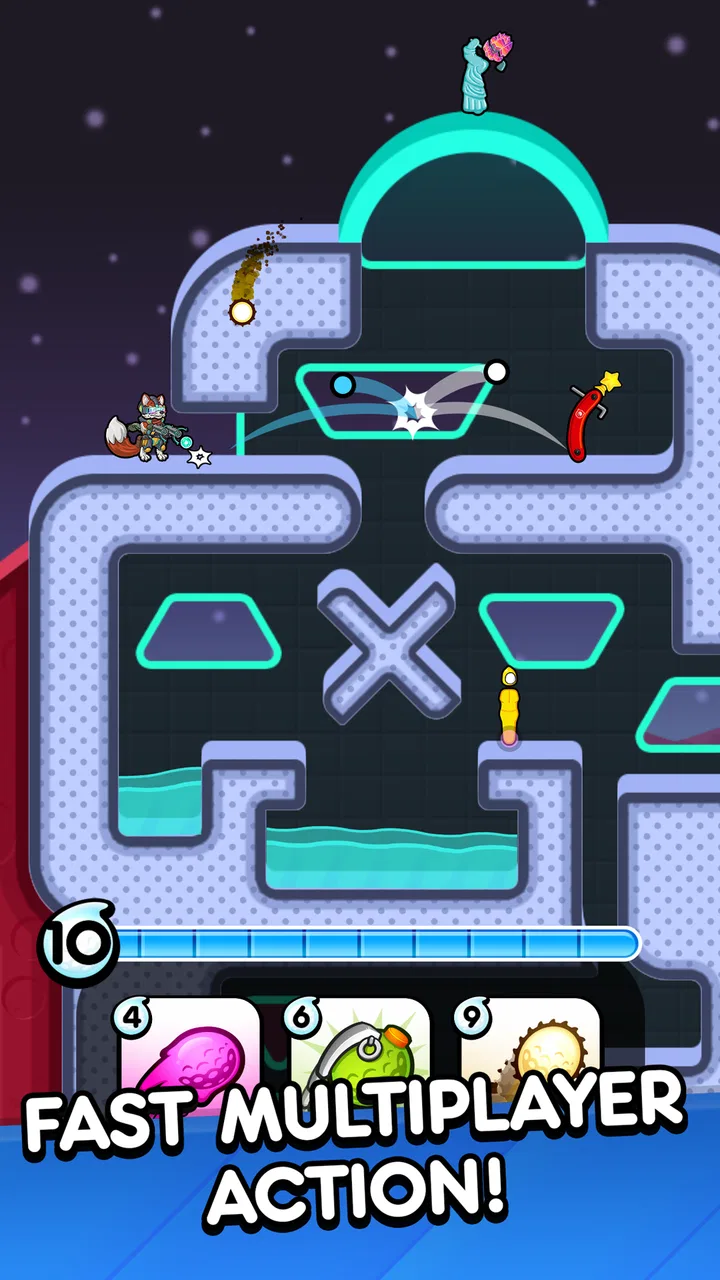
Golf Blitz is a fast-paced multiplayer golf game where the objective is to reach the hole before your opponents. Instead of taking leisurely turns, players hit their balls simultaneously through obstacle-filled courses, using power-ups and special abilities to gain an advantage. Matches are usually short, energetic, and focused on timing, aiming, and making quick decisions under pressure.
02Can Golf Blitz be played offline or without other players?
Golf Blitz is primarily designed as an online multiplayer experience, so an internet connection is generally required for its main matches and competitive features. You can practice certain aspects of the game and explore its menus without actively competing, but the core appeal comes from racing against real players. A stable connection is recommended to avoid delays or disconnections during matches.
03Is Golf Blitz free to download, and does it include in-app purchases?
Golf Blitz can be downloaded for free, but it uses optional in-app purchases. These purchases may provide cosmetic items, progression-related benefits, or resources that can help unlock content more quickly. You can enjoy the basic gameplay without paying, although progression may require patience because rewards, upgrades, and other unlockable features are often tied to regular play and timed systems.
04Does Golf Blitz support competitive play and progression systems?
Yes, competitive play is one of Golf Blitz’s main attractions. Players can improve their characters, unlock and upgrade abilities, and compete through ranking or league-style systems. Winning matches and completing objectives helps advance progression, while stronger abilities can influence how you approach each course. However, success still depends heavily on aiming, timing, course knowledge, and effective use of power-ups.
05Is Golf Blitz suitable for children and casual players?
Golf Blitz is easy to understand because its basic goal is simply to get the ball into the hole quickly, making it approachable for casual players. However, the multiplayer competition, fast pace, chat or social features, and optional purchases mean parents may want to review the game’s settings before allowing children to play. Younger users should also be supervised when using online or payment-related features.
Pros
- Quick matches make it easy to play during short breaks.
- Simple controls are easy to learn
- even for casual players.
- Real-time multiplayer keeps every match competitive and unpredictable.
- Unlockable golfers and cosmetics add variety and personalization.
- Courses include hazards that make strategic shots especially rewarding.
Cons
- Online matches can feel frustrating when opponents have stronger upgrades.
- Progression may take time unless you are willing to wait or spend money.
- The energy system can limit how many matches you play in a session.
- Fast-paced rounds may favor players with quicker reactions.
- Some courses and features unlock gradually rather than immediately.

Golf Blitz
Gallery